Shiitake
Strong umami, woody and slightly smoky, concentrated by drying. Fleshy.
- Origin
- East Asia
- Texture
- Fleshy
What it brings to your cooking
Strong umami, woody and slightly smoky, concentrated by drying.
- Scientific name
- Lentinula edodes
- Texture
- Fleshy
- Origin
- East Asia
Where it grows
Traditionally on deciduous logs in Asia; now grown on logs or sawdust blocks.
Choose and prepare it well
Wipe caps and remove fibrous stems, useful for strained stock.
- Choose firm specimens without slimy areas or unusual smells. For wild species, use only batches checked by a competent inspection service.
- Clean with a brush or damp cloth. If soil persists, a very brief rinse is possible, but dry immediately: waterlogged mushrooms brown poorly.
- Separate parts that cook at different rates and cut even pieces. Prepare the pan before cutting the most fragile species.
- Cap
- the top and usually widest part of a mushroom.
- Stem
- the part supporting the cap; its base may be earthy or tough.
- Thinly slice
- cut into thin slices or strips as evenly as possible.
- Braise
- cook gently, covered, with a little liquid, optionally after browning.
- Sear
- cook quickly on a very hot surface to brown the outside without boiling food in its moisture.
The best way to cook it
Sauté, braise or add to soup; cook fresh mushrooms thoroughly.
AvoidRemove fibrous stems and never serve fresh shiitake undercooked.
Shiitake fried rice
Total time · 25 min2 people
Clean and cut all mushrooms before heating the pan. Dry well and allow enough space for browning rather than stewing in their water.
- 200 g shiitake
- 300 g cold cooked rice
- 2 eggs
- ginger
- soy sauce
- 1
Remove stems, slice caps and cook over high heat for 6 to 8 minutes.
- 2
Add ginger and cold rice; stir-fry until grains are hot.
- 3
Push rice aside, scramble eggs in the pan and combine with soy sauce.
Pairings that work
Dish ideas
Undercooking can cause a specific dermatitis in some people.
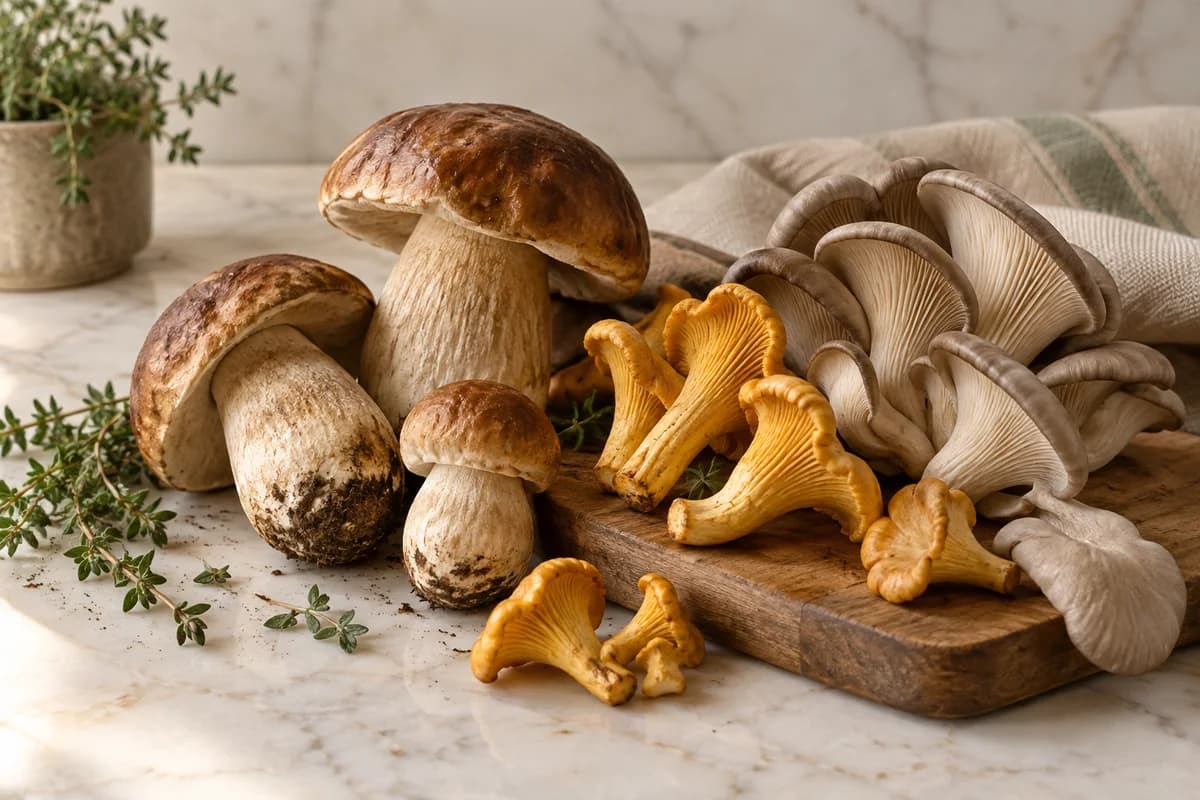
Forty-five mushrooms, each with the right technique.
From porcini to morels, explore seasons, cooking techniques, pairings and mini-recipes in Sève’s Notebook.